Wisdom Bank - Sudhir Agarwal: The Road He Never Planned to Take
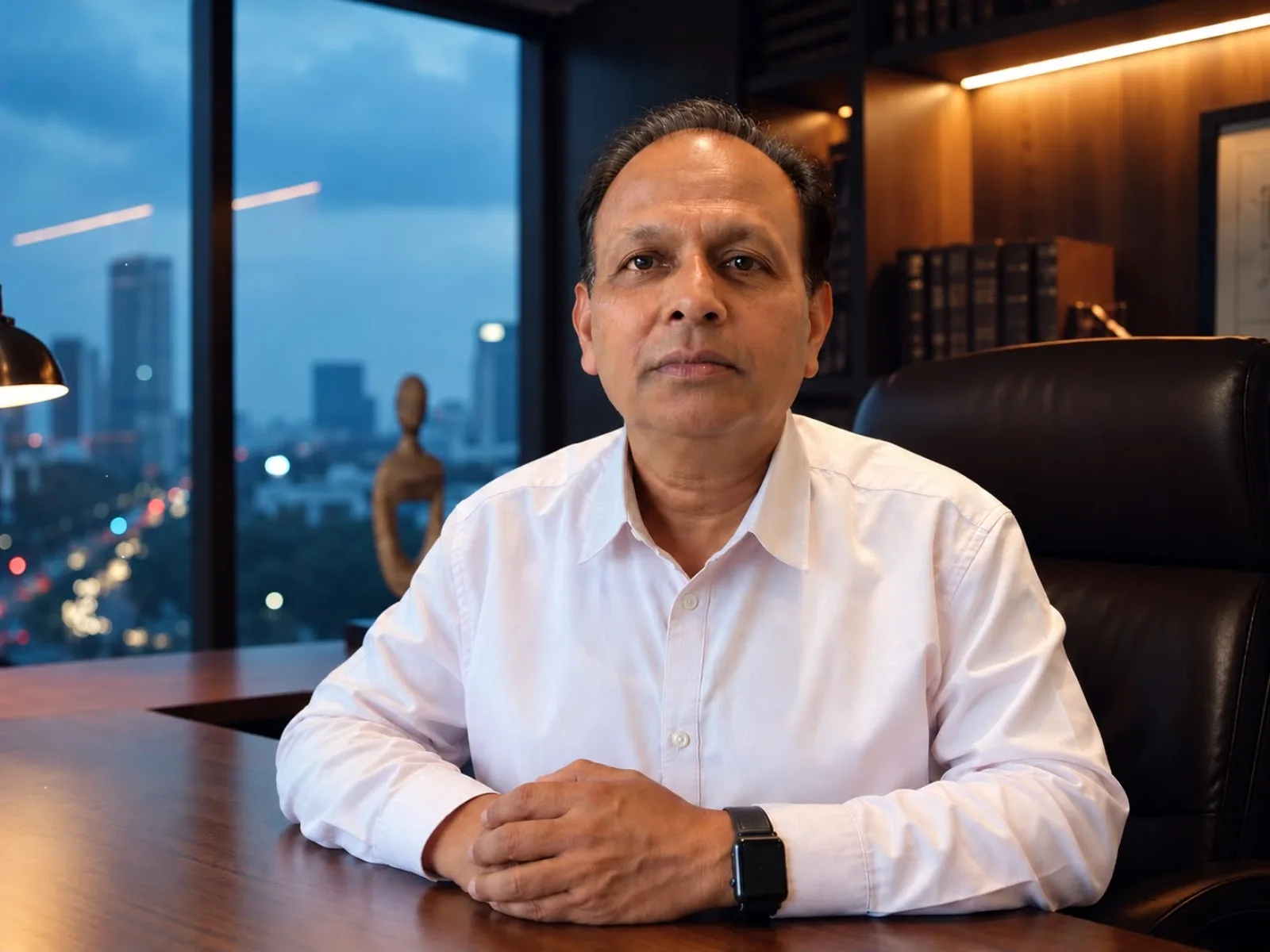
There is a particular kind of silence that comes after a plan falls apart.
You have done what you were supposed to do. You have imagined the next few years. You can almost see yourself living that future. Then, suddenly, someone says no.
What do you do with the life you had already started imagining?
For Sudhir Agarwal, that question arrived when he was still young.
He had secured admission for higher studies in the United States. The plan was simple: go abroad, study further and see where that opportunity took him.
Then his visa was refused.
He tried again. His admission was extended, giving the plan another chance.
The answer was still no.
At some point, Sudhir stopped knocking on that door.
He could not have known then that this would become one of those moments in life that only make sense much later.
Because the career that followed would take him through government service, steel, copper, aluminium, mining, infrastructure, ports and large-scale procurement. He would eventually find himself managing responsibilities worth thousands of crores.
But none of that was visible on that day.
There was simply a young man whose first plan had failed.
And somewhere, waiting quietly in the background, were the lessons he had learnt at home.
The Man Who Taught Him to Keep Things Simple
When Sudhir talks about what made him who he is, he does not begin with the companies he worked for.
He talks about his father.
His father was an administrative officer in the Rajasthan Government, but Sudhir remembers him less for his position than for the way he behaved.
He was, in Sudhir's words, simple, truthful and straightforward. Their home was welcoming to people who came through the door. If someone needed help and his father could provide it, he would.
There was something else that stayed with Sudhir.
His father did not seem particularly interested in status. If someone needed help, that person mattered more than someone who happened to occupy a higher position.
For a child watching this, it was simply the way home worked.
Only later would Sudhir understand how unusual that could be.
His father also believed that a person should keep his worries under control. He would often quote a saying:
“Chaha miti chinta gayi, manva beparvah; jisko kachu na chahiye, wo shahano ka shah.”
Reduce your wants, and your worries reduce with them.
It was not advice delivered from a stage. His father simply lived it.
Sudhir remembers him as a deeply religious man who read extensively about religion and carried his beliefs quietly into everyday life.
Decades later, Sudhir would find himself in situations where keeping life simple was considerably harder.
The stakes would be bigger.
The numbers would be bigger.
The people around the table would have far more power.
And the question would no longer be whether honesty was a good principle.
It would be whether he could hold on to it when there was something to lose.
The Decision That Changed the Direction
After his plans for America fell through, Sudhir entered government service.
He spent around ten years there, working across different phases of the power sector and gaining exposure to supply chain and the emerging use of computers. Eventually, he was heading electricity distribution for a particular zone in Rajasthan.
It was a significant position.
He had a large team. He had responsibility. He had a stable career.
Yet he had begun to feel that it was not where he belonged.
There was another problem too. Sudhir felt that if he wanted to grow in the way he envisioned, the environment would not allow him to do it.
So he left.
The decision sounds straightforward when told in retrospect.
It wasn't.
He was leaving a large organisation and a substantial team to join the private sector in a much smaller role. There was no certainty that the move would work.
But that smaller role at Lloyds Steel became the place where he discovered something important about himself.
He found that he understood supply chain.
Materials management, vendor development, contracts, technical requirements and the countless negotiations required to keep an industrial operation moving began to make sense to him.
He worked around steel-plant commissioning and gained exposure to vendors across India. He was learning how businesses worked from the ground up.
And gradually, something that had never been part of his original plan began to look like it might actually be his thing.
He did not describe it as destiny.
He described it as a flow.
The People Along the Way
There were other turns before the career became what it eventually would.
Sudhir briefly joined his uncle's knitwear business, which was struggling and needed to be turned around. He worked there for about two years, changing systems and trying to make the operation viable.
But there was only so much he could do without more capital.
So he moved again.
At Lloyds Steel, he met a professional mentor, Mr Toshniwal, whom he remembers as exceptionally sharp, deeply honest and highly religious.
Toshniwal helped create an opportunity for him in Mumbai.
It is striking how often people appear at the important turns in Sudhir's story.
His father gave him a way of looking at people.
His mentor gave him professional guidance.
The work gave him a field in which his abilities could grow.
And then came an opportunity that would change the scale of everything.
Sudhir moved into the Vedanta Group, first through Sterlite Copper and then Bharat Aluminium Company. At BALCO, he was involved in a major expansion that, he says, was commissioned in 19 months.
At Hindustan Zinc, his responsibilities expanded further across six smelters and seven mines.
The career was gathering momentum.
The Vedanta Project That Changed the Scale
Sudhir's next major test came while handling Vedanta's aluminium smelter expansion project at Jharsuguda in Odisha.
The project had a capacity of 1.25 million tonnes and, according to Sudhir, was the largest aluminium smelter expansion project in India, including the largest project of this size that he had handled.
The scale of the responsibility was significant.
And thereafter came another major responsibility: handling coal as a commodity, with an annual procurement outlay of around ₹12,000 crore.
Thousands of crores moving through contracts, suppliers and negotiations, with power plants depending on the supply arriving when it was needed.
There was very little room for complacency.
Sudhir says he was prepared to tell management when he believed people were not doing the right thing.
He also had to work with political figures and others whose interests could be very different from his own.
His approach was simple.
Keep the relationship.
Keep your cards clean.
That second part mattered.
He says that because he was straightforward about what he was doing, he could demonstrate to management when something was wrong.
There was a practical reason he preferred this way of working.
It gave him peace of mind.
If you tell the truth upfront, you do not have to spend your energy remembering which version of the story you told yesterday.
It sounds almost too simple for a job of that scale.
But perhaps that was precisely the point.
The lesson had begun decades earlier, in his father's home.
Now it was being tested in an environment where there was considerably more at stake.
The results were significant too. Sudhir says he managed to supply the group's plants successfully with only around three to four days of coal inventory and achieved major savings, particularly important because coal represented roughly a third of the aluminium cost.
The numbers tell you how large the responsibility was.
His conduct tells you how he chose to carry it.
The Ambition That Had Boundaries
Success can make a person's life look inevitable.
Sudhir's wasn't.
At one point, he read The Secret and became interested in the idea that what you dream about, and what you actively work towards, can shape what you eventually achieve.
He had not always dreamed very big.
When he was working in government, he says, his ambitions were modest. He had a home and a family. If he could have a car, that would be good enough.
Then opportunities kept appearing.
He moved through increasingly senior roles, worked on major industrial expansions and eventually took on large responsibilities in the Adani Group.
But there is something important in what he says about the opportunities he did not pursue.
He believes that there were things he might have achieved if he had chased them harder.
He chose not to.
His family mattered.
For years, his work had required him to live away from home. He had already spent enough time making that trade-off.
There comes a point when another professional opportunity has to be measured against something other than money or status.
Sudhir had a family waiting at home.
And his wife was carrying much of the responsibility there.
The Work Happening at Home
While Sudhir was travelling, managing projects and building his career, his wife was raising their children.
He describes her as a mentor to them, someone who took care of what needed to be taken care of while his professional life kept pulling him elsewhere.
Their daughters have since built careers of their own.
His elder daughter is a dentist in the United States, and his son-in-law is a director at Google. His younger daughter is an IT professional who completed her master's at ISB Hyderabad and works at Microsoft. She has recently married.
Sudhir speaks about them with the kind of pride that does not need embellishment.
Perhaps because there is a point in life when you start seeing your own achievements differently.
The project you completed was important.
The promotion mattered.
The savings mattered.
But so did the years someone spent making sure the family was okay while you were away.
Some achievements never appear on a résumé.
You only recognise them when you look around the dinner table years later.
When Things Go Wrong
For someone who spent decades managing problems, Sudhir's philosophy about difficult times is surprisingly calm.
When things do not go the way you want, he says, stay calm.
Keep acting.
And give it time.
If work is going badly, perhaps shift some attention towards family. There may be things there that you have neglected because work demanded so much of you.
Then come back.
The idea is not to run away from the problem.
It is to stop allowing the problem to become the only thing you can see.
That may sound simple, but it is difficult to practise.
Careers are full of moments when the instinct is to push harder, worry more and keep staring at the obstacle until it moves.
Sudhir's experience seems to have taught him that some things respond better to patience.
You do what is within your control.
Then you let time do some of the work.
After Retirement, The Question Changes
In 2022, Sudhir retired.
But retirement did not mean becoming idle.
A friend approached him about a craft-paper project that was in trouble. Sudhir spent around one and a half to two years helping bring it towards reality, including its dry commissioning.
Eventually, their expectations about what the arrangement should become were different, and Sudhir decided to move on.
Today, he is still working, but in a very different way.
He is supporting a five-star hotel project in Udaipur and is responsible for a container depot project at Salarpur near Gurgaon, taking it from the ground up towards commissioning.
The difference is that the work now fits around his life.
He plans his current professional commitments in a way that gives him sufficient time for his family and for pursuing his hobbies.
Some of that time goes into looking at equity stocks. Some into health and family.
And increasingly, some is going towards spirituality.
Sudhir says he now wants to spend more time attending his Guru's spiritual discourses and reading the Bhagavad Gita.
After decades spent asking how to make a project work, how to manage a contract or how to solve a commercial problem, he is beginning to spend time with questions that have no spreadsheet answer.
Finding the Work That Fits
When Sudhir looks back at his career, he does not describe a childhood dream that eventually came true.
He found his profession along the way.
Engineering led to government service. Government service led him back into the private sector. Supply chain emerged almost naturally. Then, over the years, he discovered that complicated contracts, commercial negotiations and relationships with vendors were areas in which he had an unusual instinct.
He says he handled this kind of work for three or four decades without a single court case.
That is you see an example of swadharma.
The work that fits you.
Not necessarily the work you planned.
Not necessarily the work that carries the most prestige.
The work in which your abilities and temperament seem to find their natural place.
It is an idea that makes sense of the twists in his story.
Perhaps the goal was never to know the entire road.
Perhaps it was to recognise the next right turn when it appeared.
What Comes Next
There is no dramatic retirement story here.
Sudhir has not stopped working. He has simply changed his relationship with work.
He still likes solving problems. He still has projects to think about. He still looks at the markets.
But there is more space now.
For his family.
For his health.
For spirituality.
For the Bhagavad Gita.
And perhaps for a question that becomes harder to avoid after a certain number of years:
What makes a life meaningful?
Sudhir does not answer it with a formula.
Maybe that is appropriate.
His own life has never followed one.
A visa refusal changed the direction of his early plans. A government career led somewhere else. A smaller private-sector opportunity revealed a talent he had not known he possessed. Relationships opened doors. His father's values travelled with him into places where they could have been tested and compromised.
They weren't.
And after decades of achievement, the things he is thinking about now are not necessarily bigger.
They are deeper.
That may be the quietest lesson in his story.
You can spend a lifetime learning how to build things in the world around you, only to reach a point where the more interesting work is figuring out what you want to build within yourself.
Sudhir's road was never the one he first imagined.
Perhaps none of ours are.
The difference is that when the road changed, he kept walking.
And now, after all these years, he seems less interested in asking where it will take him.
He is interested in making sure that, wherever it leads, the journey means something.
By Ugesh Sarcar